
Valuation
The brand value of Djokovic
Is the GOAT underpriced?
That is the question behind the Djokovic brand valuation problem.
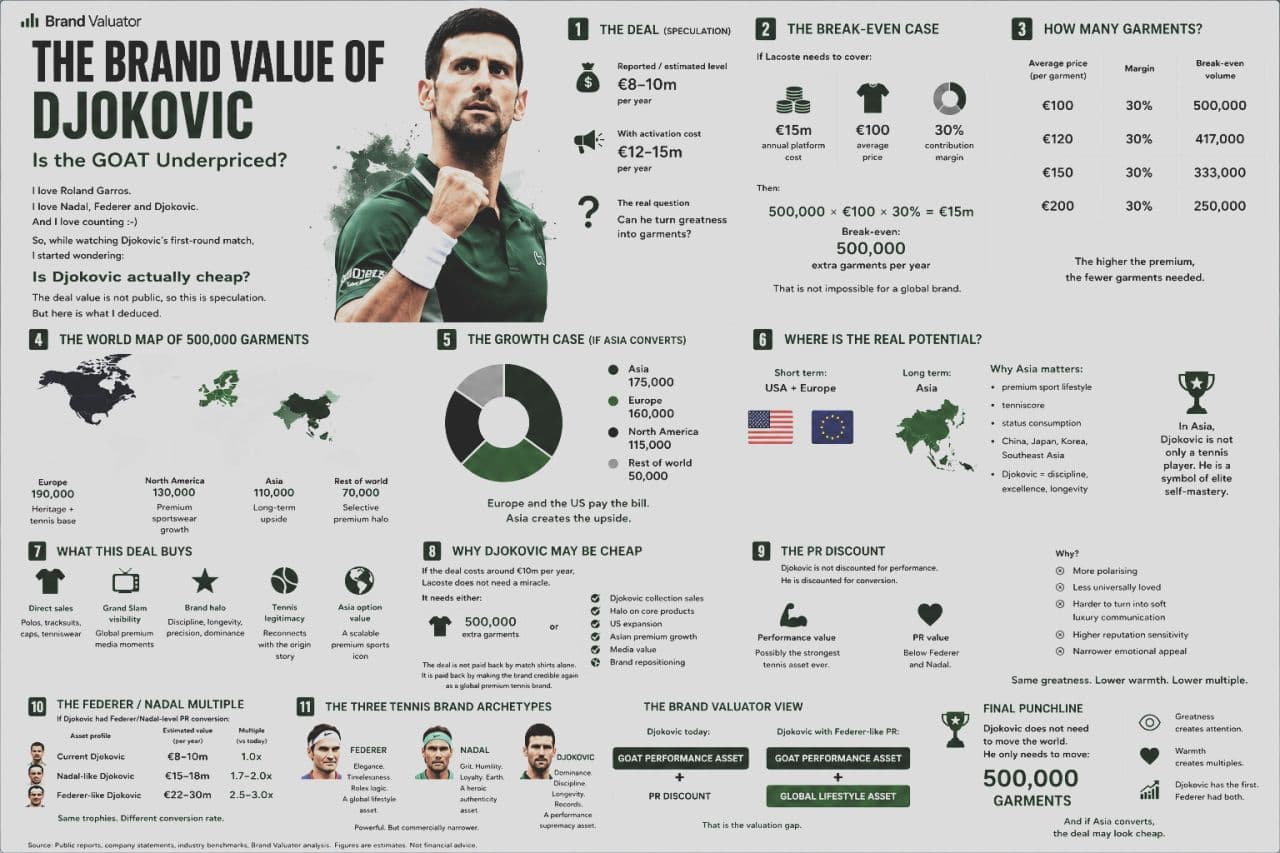
The image frames a simple commercial puzzle: if a reported sportswear deal costs around €8–10 million per year, or perhaps €12–15 million with activation, how much product must the brand sell to make the economics work?
At an assumed €100 average garment price and 30% contribution margin, a €15 million platform cost implies roughly 500,000 extra garments per year.
That number sounds large.
But for a global sportswear brand, it is not absurd.
The deeper question is not whether Djokovic is great. His performance value is almost beyond dispute.
The question is whether greatness converts.
Federer, Nadal, and Djokovic may all carry extraordinary sporting value, but they do not convert into brand economics in the same way. Federer carries elegance and luxury fit. Nadal carries grit, loyalty, and warmth. Djokovic carries dominance, discipline, longevity, and records.
That makes Djokovic a powerful performance asset, but potentially a more complex PR asset.
The valuation gap may sit there.
Not in trophies.
Not in awareness.
Not in athletic credibility.
But in emotional warmth, lifestyle transfer, conversion rate, and geographic upside.
The interesting case is Asia.
If Djokovic becomes less a tennis player and more a symbol of discipline, excellence, and self-mastery, the commercial upside changes. Then the deal is not only about selling match shirts in Europe or the US. It becomes about turning greatness into a broader premium sports lifestyle asset.
So the question is not:
Is Djokovic valuable?
The question is:
How many garments does greatness move?
If the answer is 500,000, the deal may look expensive.
If Asia converts, it may look cheap.