
Method
Which brand metrics actually matter?
One of the hardest questions in brand measurement is not whether metrics matter.
Most companies already track a great deal.
Awareness, familiarity, consideration, preference, trust, NPS, salience, relevance, distinctiveness, associations, share of search, share of voice and campaign performance.
The harder question is where each metric belongs — and what it is expected to influence.
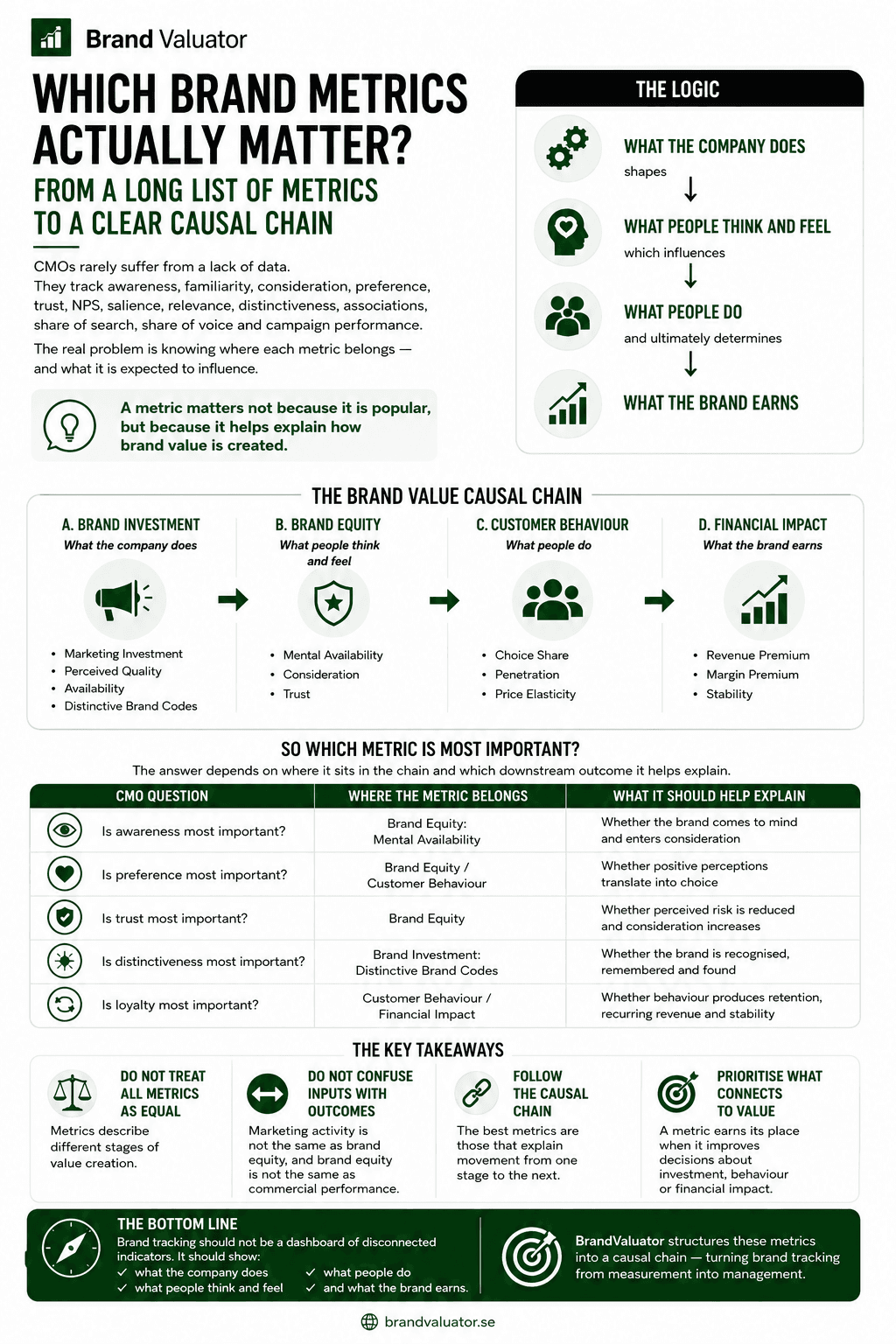
Some metrics describe what the company does.
Others describe what people think and feel.
Others capture what people do.
And some reflect what the brand ultimately earns.
When these levels are mixed together, brand tracking can become a long list of indicators without a clear decision logic.
There is a better way to structure the conversation.
Not by searching for one universally important metric.
And not by treating every measure as equally close to business value.
But by placing each metric in a causal chain:
Brand investment shapes brand equity.
Brand equity influences customer behaviour.
Customer behaviour produces financial impact.
If mental availability improves, does the brand enter consideration more often?
If preference strengthens, does it translate into greater choice?
If trust increases, does it reduce perceived risk or improve retention?
If distinctive brand codes become stronger, does the brand become easier to recognise, remember and find?
These are more useful questions than simply asking:
“Which metric matters most?”
The answer depends on where the metric sits in the chain — and which downstream outcome it helps explain.
The future of brand measurement is not just more data, dashboards or tracking studies.
It is clearer links between what the company does, what people think and feel, how they behave and what the brand earns.
Where do brand metrics most often lose their connection to business value?